
Plan the work.
Name the steps, their dependencies and the evidence they require. Simple requests can take a shorter path; the architecture describes the system, not a mandatory journey for every question.
Spec 001 · Runtime and planning ↗01 / How it works
A model proposes. Evidence supports or contradicts it. The runtime decides what can proceed—and what can be claimed.
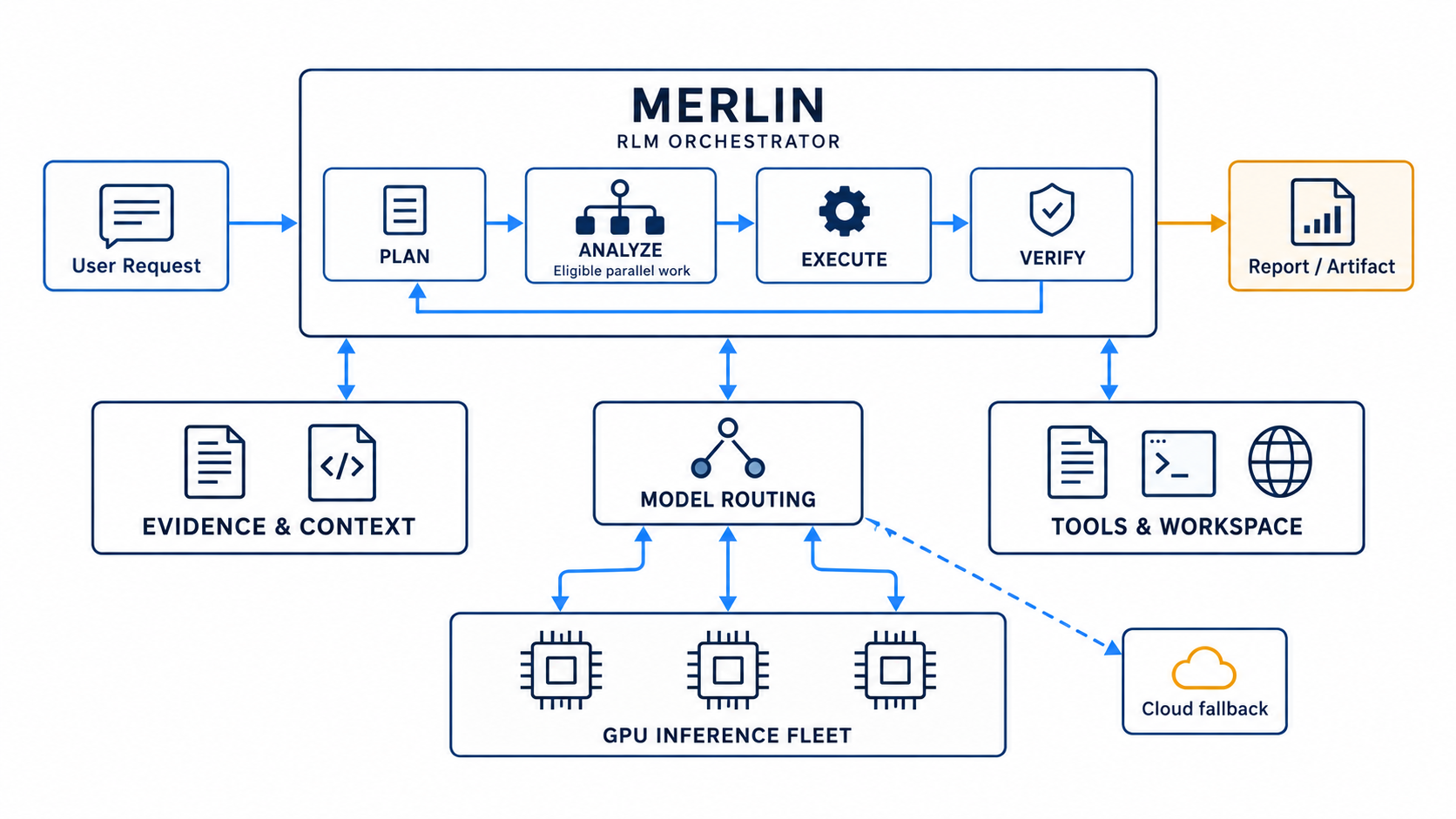
Name the steps, their dependencies and the evidence they require. Simple requests can take a shorter path; the architecture describes the system, not a mandatory journey for every question.
Spec 001 · Runtime and planning ↗Read the relevant files and sources. Record what was observed so later claims can refer to it. A previous conclusion is context; it does not replace a fresh observation.
AC-005-001-03 ↗Analysis separates a candidate finding from an established one. Rebuttal records whether it survived, was refuted, or remains inconclusive.
AC-006-005-01 ↗Changes are staged. Reads and verification operate on the staged content where applicable; the workspace changes at commit.
AC-003-002-03 · AC-003-002-04 ↗The final decision reads task and operation summaries, the request contract, and the proposed answer. Deterministic guards can veto a success claim even after model authorization.
AC-004-004-13 ↗The architecture
Models provide reasoning. The runtime coordinates evidence, tools and decisions. Configured providers supply inference; they do not own permission to change the workspace or claim completion.